In the unique geological landscape of South Florida, selecting the right building material is about more than just aesthetics; it is about performance. Between our sandy soil, heavy seasonal rainfall, and the relentless coastal humidity, your retaining wall needs to be as resilient as it is beautiful.
At Epic Stoneworks, we understand this better than anyone because we are not just suppliers, we are the source. We quarry our own Oolite directly from our Florida City location, ensuring that every block meets our rigorous standards for structural integrity and natural beauty.
If you are a homeowner or contractor planning your next project, here is how to master the installation of an Oolite retaining wall.
Phase 1: Planning and Soil Assessment
Before the first block is moved, you must evaluate the terrain. South Florida’s sandy soil offers excellent drainage but can be prone to shifting if not properly contained.
- Determine Wall Height: Most residential Oolite walls serve to manage slight elevation changes or create raised planters. For walls over three feet, we recommend consulting an engineer to ensure proper reinforcement.
- Identify Utilities: Always call 811 to locate underground lines before digging.
Phase 2: Preparing the Base
The longevity of your wall depends entirely on the foundation. Because Oolite is a porous, calcareous limestone, it integrates beautifully with the environment, but it requires a level starting point.
- Trenching: Dig a trench approximately twice the width of your Oolite blocks. The depth should allow for a 6-inch base of compacted road rock or crushed stone.
- Compaction: Use a plate compactor to ensure the base is rock-solid. A firm base prevents the “leaning” often seen in DIY walls.
- The First Course: Bury at least half of the first layer of Oolite blocks. This “set” layer provides the friction and weight necessary to anchor the entire structure.
Phase 3: Stacking with Precision
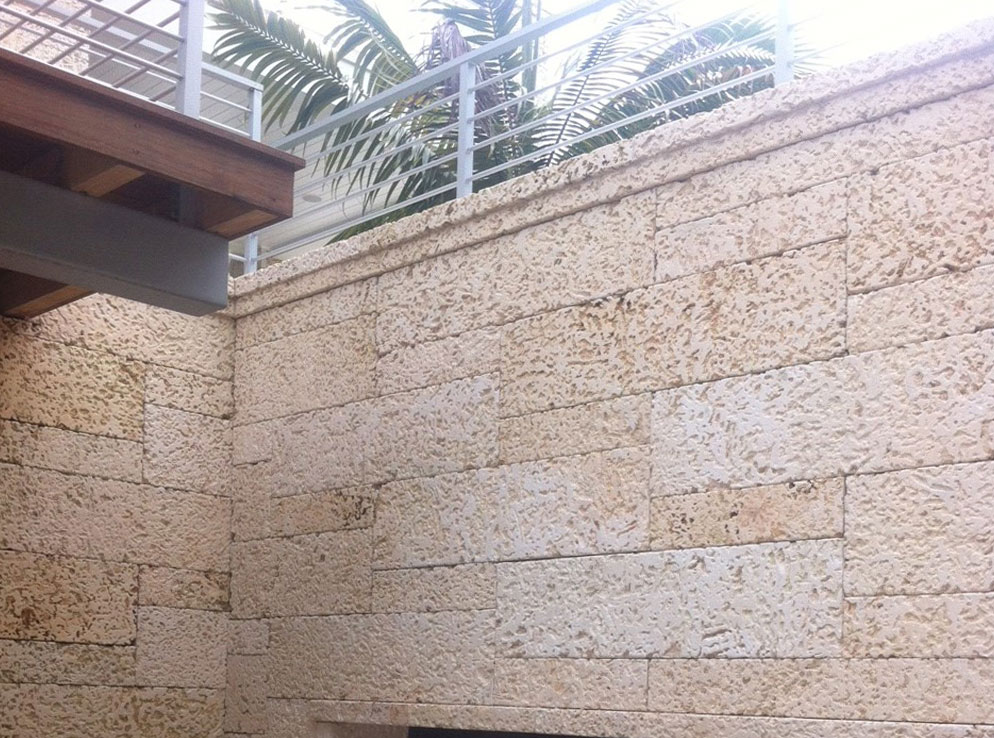
Oolite is prized for its “fossilized” texture and creamy hue, but its irregular natural edges require a professional touch during the stacking process.
- Staggered Joints: Always offset the vertical joints (the “running bond” pattern). A joint should never sit directly above another, as this creates a fault line in the wall.
- The Batter: To resist the outward pressure of the soil, lean the wall slightly back toward the slope (approximately 1 inch of “batter” for every foot of height).
- Adhesive: For low-profile decorative walls, a high-strength concrete adhesive is often used between courses to lock the Oolite blocks in place.
Phase 4: Drainage and Backfill
In South Florida, water is the primary cause of wall failure. Hydrostatic pressure from heavy rains can push a wall right over if it has nowhere to go.
- Perforated Pipe: Install a 4-inch perforated drainage pipe (French drain) behind the first course of stone, sloped to an exit point.
- Gravel Backfill: Fill the space directly behind the blocks with 12 inches of clean gravel. This allows water to drop straight to the drain pipe rather than pressing against the stone.
Why Choose Epic Stoneworks Oolite?
When you source your stone from Epic Stoneworks, you are cutting out the middleman and gaining access to a team with deep technical knowledge. Our Oolite is uniquely suited for the Florida climate; it remains cool to the touch even in the summer heat and develops a stunning patina over time that complements our local tropical flora.
Whether you are a project manager looking for specific dimensions or a homeowner dreaming of a backyard transformation, we are here to help you select the perfect cut for your needs.
Contact us today for a consultation to discuss your project specifications. Let’s build a South Florida landmark together.